
Both Jet Airways and Go First have met with a similar fate of landing up in insolvency, albeit for different reasons. Whether Go First will be able to avoid the sharp erosion in value like in the case of Jet, experts say, will depend on how quickly it is able to restart operations and retain its slots at airports. Go First, owned by the Wadia group, filed for voluntary corporate insolvency resolution on May 2 due to inadequate capacity utilisation that led to a cash crunch.
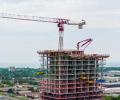
'In real estate project insolvency, no one size can fit all.'

The Appointments Committee of Cabinet has named Ravneet Kaur, a Punjab cadre IAS officer of 1988 batch, as chairperson of the Competition Commission of India (CCI). Kaur will hold the post for five years or until attaining the age of 65. She is the second woman to serve in an 'economic regulator' role after Madhabi Puri Buch, who was appointed chairperson of the Securities and Exchange Board of India last year and the first woman to head the country's chief national competition regulator.
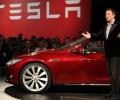
Senior Tesla executives including those from its supply chain are planning to come to India on Wednesday and Thursday for meetings with government officials, including those in the Prime Minister's Office, according to sources. Prashant R Menon, director of Tesla India, did not respond to a specific query on the meetings. Sources say that the executives are coming to see how they can expand and develop local sourcing of components from India for the Tesla car.
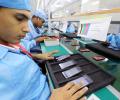
India's stiff labour laws were one key issue that Apple CEO Tim Cook discussed with Prime Minister Modi on his recent visit.

OSAT majors have concerns about India's ability to provide a stable, predictable, and lasting policy environment for years to come, which is key for making a decision in a capital-intensive business.

In what could result in a complete overhaul of the Insolvency and Bankruptcy Code (IBC), the insolvency regulator has sought public comments on the regulations it notified under the code to date. The Insolvency and Bankruptcy Board of India (IBBI) has given a window of eight months ending December 31 to all stakeholders to share their views on its regulations. IBBI has called the exercise "crowdsourcing of ideas".

The government is planning to draft rules for the National Company Law Tribunal (NCLT) to deal with Insolvency and Bankruptcy (IBC) cases, according to official sources. The Ministry of Corporate Affairs (MCA) is also looking to fill all vacant posts at various NCLT Benches by August and put in place an IT-enabled system that would use artificial intelligence (AI) for case management. The NCLT, adjudicating authority for matters related to company affairs, was constituted before the IBC came into effect.

The government's ambitious vision document that aims at achieving electronics manufacturing with a value of $300 billion by FY26 (including exports of $105-130 billion) could end up far lower than the target, according to a reality check this month. The reality check came from the Indian Cellular and Electronics Association (ICEA), which partnered with the government in preparing the document. The members of the ICEA are mobile and electronics companies, and its assessment, based on current trends, indicates that the total electronics production in FY26 will be around $225 billion.

The government is close to approving a proposal by Micron Technology to set up an assembly, testing, marking and packaging (ATMP) facility in the country involving an investment of about $1 billion. The world's fifth largest semiconductor company, based in Idaho, USA, will use the facility to process some of its own wafers, manufactured across the globe.

'If the airlines are not given a clear deadline to change the altimeters by the DGCA, why should they do it voluntarily?' 'It means that the aircraft will be grounded for a while and lose money.'

Stung by the government's punitive action on electric two-wheelers, registrations in April fell by nearly a fourth to 62,581 from 82,292 in March, according to data from VAHAN. Electric two-wheeler companies, including Okinawa, Hero Electric, Ather Energy, and TVS, have all clocked their lowest registrations in the four months of this calendar year. Ola Electric has been the only exception to this bloodbath, and has crossed its March numbers, hitting 21,560 registrations in April, which is its highest in this calendar year. As a result, there have been some interesting changes in the electric two-wheeler pecking order.

Companies making electric two-wheelers, through their association Society of Manufacturers of Electric Vehicles (SMEV), have taken on the Department of Heavy Industries (DHI), saying they did not get subsidies for even half the mandated 1 million units they manufactured. Subsidies are given under Faster Adoption and Manufacturing of Hybrid and Electric Vehicles 2 (FAME II). In a petition to the parliamentary standing committee on industry energy and estimates, the SMEV said the department had done an "accounting error" by showing that it (the department) was close to achieving the mandated target by including sales of the EVs that were "not funded" under the scheme.

E-commerce players may soon rent out drones, so you can use them the way you book a cab on an app, and test viable use-cases for last-mile delivery.

A key feature of the new version is to identify the people transacting on its portal by linking each user ID with the person's permanent account number (PAN), followed by a two-factor authentication through mobiles and email IDs. Those who cannot complete the KYC requirements cannot use the portal.

The new mantra was to align Apple's ambition with the government's, focusing on Modi's favourite themes of Make in India, employment generation and India as a high-tech export hub.

In the run-up to Apple CEO Tim Cook's visit to India, government officials are finalising the talk points with the Cupertino-headquartered tech major. Officials said that the government would like Apple to "deepen" the company's engagement in the manufacturing and assembly of iPhones in the country and not limit itself only to the minimum commitments made under the production-linked incentive (PLI) scheme for mobile devices. The conversations between the two sides are likely to focus on that.

India doubled its exports of smartphones to $11.1 billion (about Rs 91,000 crore) in 2022-23 (FY23) over the previous year's figure of $5.48 billion (Rs 45,000 crore), thanks largely to the Apple juggernaut, according to data from the India Cellular and Electronics Association (ICEA). Union Minister for Communications, Electronics & IT Ashwini Vaishnaw said: "With the doubling of exports of smartphones to over Rs 90,000 crore, India is well on its way to becoming a leader in the global mobile device market." On the flip side, despite the government prodding Chinese companies to export more, their smartphone shipments fell steeply by 26 per cent from $214 million in FY22 to $157 million in FY23.

The impact of AI automation in India is the lowest.

'Who are the people who are dying?' 'What is their profile?' 'We need to know these things.' 'We do not take health issues seriously.'
 © 2026 Rediff.com - Advertise with us - Disclaimer - Privacy Policy - Sitemap - Feedback - About us - Terms of use - Grievances